
The Value of Open Innovation and Technology Transfer
At a recent event organized by the photonics cluster SECPhO and hosted by the photonics research organization ICFO, we shared our experience and know-how of technology transfer with leading companies and research organizations in the Catalan region. Our value proposition and the value creation we provide our customers can be described in three key areas.
Embrace Open Innovation
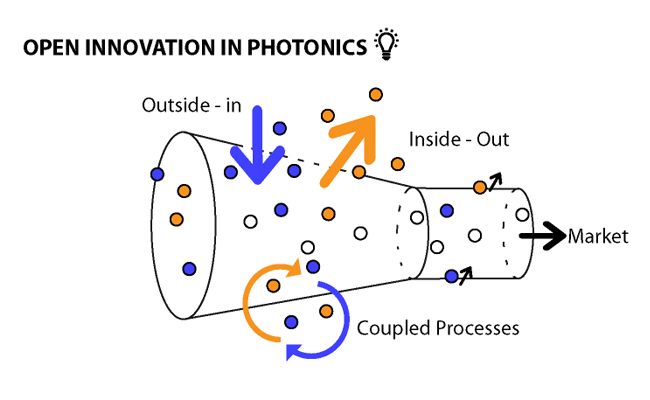
In an increasingly competitive and globalized world the ability of companies to bring innovative and highly value-adding technologies to the market is becoming extremely important in order to prosper or even survive. Through open innovation a company can leverage existing resources such as intellectual property rights, or look for external resources in order to speed up technological development, providing mutual benefits to the stakeholders involved. In the spirit of Open Innovation companies achieve this through technology transfer. Technology transfer can take place in many different forms such as licencing agreements, patent acquisitions and joint ventures. A basic concept of open innovation is that it is both inside-out as well as outside-in. This means that information and know-how from within the organization will be transferred to external partners on one hand and information and know-how will also be absorbed by the organization from external sources.
Use a global marketplace
The world of photonics is no exception and in order to bridge the gap between science and market, companies turn to partners providing an intellectual property (IP) marketplace and serving as the technology transfer facilitator. The marketplace is a virtual space where companies and research organizations come together to share technologies available for transfer or to launch requests for solutions to specific technological needs. For the research organization the marketplace provides a way to rapidly enhance visibility for their technology to companies worldwide. For companies the marketplace allows to connect with scientists and experts worldwide that can provide technical expertise, particular know-how and innovative solutions to the company’s challenges.
Accelerate your technology transfer process
While employing a mindset of open innovation and engaging in a global marketplace to offer or search for technology transfer opportunities are a good start, more is needed to achieve a successful technology transfer operation. In essence successful technology transfer is about finding the optimal match between the technology owner and the industrial buyer in terms of added value, product/service portfolio mix, strategic focus, resources and timing. Complex match making algorithms and traditional business development methods are employed to accelerate the technology transfer process and thus optimizing the value of the technology.
Speed matters. For the technology owner the period between the first patent filing application and the national patent phase is very critical as the patent has no geographical limitations and finding a match with an industrial partner is easier. There are also considerable additional costs involved for the PCT application and the sub-subsequent national patent applications. The inherent risk in this phase is of course that the patent is not granted until it is examined by the authorities in the national phase although a preliminary examination can be applied for during the PCT phase (optional). Typically when a transaction is not made during the PCT phase the patent owner will either abandon the patent or for cost restrictions only apply for a limited number of national patents and thereby limits the geographical protection for a future buyer to the selected territories.
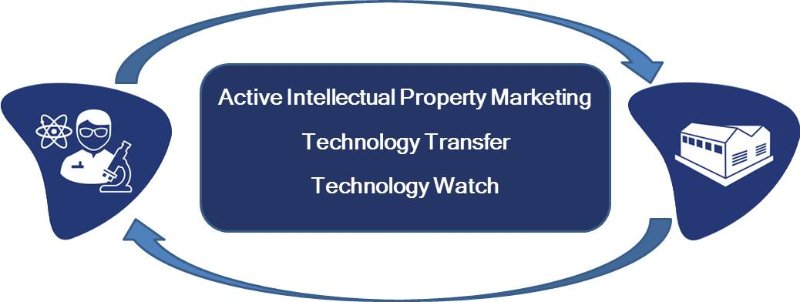
To secure a future competitive advantage backed by a strong value proposition companies have strong interest in quickly picking up on new technologies and assess the fit of a potential technology transfer operation to absorb the know-how and patents. This can be achieved by performing a technology watch or technology scouting on a regular basis either with internal resources or by collaborating with external partners.